


Since We Are Not Conquerors
Since we are not conquerors or colonizers, most of us will live in cultures and nations that are governed in a way that is opposed to our faith and beliefs. While we are always working to heal Mitzrayim, the narrow place, and bring life back to it, we will still be living in Babylon, the land of exile. The prophets have a lot of wisdom to share with us about how to keep our faith and culture alive while living in that exile.
Babylon is the government, no matter who runs it. Babylon is the culture, no matter who is in control of it. Babylon is the world of confusion that comes into being whenever people come together to build an institution of any kind.
It will hurt many people to believe that even our churches are a part of Babylon. Any institution, no matter how holy or pure its purpose is, is susceptible to the corruption and cycles of the world, as is everything else. It is our duty to keep the Spirit of Truth and Liberation alive in them so they can live God in the way they need to.
In the end, the Kin-dom exists within us and is not of this world. It will not manifest in this world until all the cycles of Babylon are broken and never allowed to start up again.
Living in Exile
Jeremiah 29:4-7
4. Yahweh of Armies, the God of Israel, says to all the captives whom I have caused to be carried away captive from Jerusalem to Babylon:
5. “Build houses and dwell in them. Plant gardens and eat their fruit.
6. Take wives and father sons and daughters. Take wives for your sons, and give your daughters to husbands, that they may bear sons and daughters. Multiply there, and don’t be diminished.
7. Seek the peace of the city where I have caused you to be carried away captive, and pray to Yahweh for it; for in its peace you will have peace.”
The Creative Source of All Forces, the Holy Mystery at the heart of our covenantal journey delivers a message to the captive exiles in Babylon. The Holy One says that we are where we are supposed to be, that we should build our homes and lives here, and multiply so we are not diminished. For us, that means we need to spread the gospel of the Kin-dom and help more people find their connection to viriditas and the verdurous life. We are to be agents of peace in the places we live. As we continue to walk in faith, we understand that the peace of the land we live in is the peace we have in our lives.
These words in the Book of Jeremiah were probably written after the people were taken away into captivity, not before. The people had been forcibly removed from their homeland and taken away to do forced labor for others in a foreign land. These enslaved and colonized people did not want to be told to make a life there; they wanted to revolt and go home.
This scripture, like the one in Romans 13, has been used by colonizers, enslavers, and tyrants to tell people to calm down and obey. That is not what this text is saying. It is saying that we cannot lose who and what we are, even in circumstances so dire. If we allow ourselves to disappear or stop living, we lose our identity. The people of the Holy One are called to be agents of change and restoration no matter where they are.
To many living in this captivity, these words sound like betrayal, compromise, and weakness. Isn’t it the duty of the captive to revolt? Yes, but this is a different kind of revolution. It is one that does not draw the sword and wreak bloody havoc on the people of the land. This revolution uses the sword of the Spirit, which is the Living, Spoken Word of God that changes hearts and minds. Our revolution heals the captors and restores the land. It is a revolution of peace. We do not compromise our beliefs or actions, nor do we bow down in weakness. We stand up and speak truth so we can bring liberation to all, and not just a few. It is a more radical form of revolt, one that sets the captive and the captor free.
Babylon as Confusion
Jeremiah helps us to understand our lives in the Kin-dom. Babylon is the world outside of the Kin-dom. As Mitzrayim is the narrow place, Babylon in the original sounds like the word for confusion. Babylon is figuratively the land of confusion.
We are the exile, the golah, the one who is removed or stripped away. While we are the people of the Kin-dom, we live in the land of confusion, removed from the context of the Kin-dom in our lives in Babylon. The letter reminds us that while we are in the world but not of the world (John 15:19), this creates a sense of exile in us.
In Babylon, we are told to build houses and plant gardens. Our homes are where we live, where the Kin-dom can be realized here and now. Our gardens are where we sow seeds of faith and wisdom in hopes of spreading the Kin-dom.
Our work is to seek the peace of the city and pray for it. Peace is the way of the Kin-dom, and prayer is how we live our lives as living temples of the Holy One.
Jeremiah’s letter has been misused for millennia to justify colonialism and enslavement, but it is telling us something so different. It is a reminder for us to keep our ways, living in Creation Spirituality, while recognizing that we are in Babylon.
It is not hard for us to see the power of confusion flowing through all systems of the world, and if we are honest with ourselves, it always will to some degree. Our job is not to conquer, colonize, or to destroy the city we find ourselves in, but to build homes, sow gardens, and seek peace. That is not keeping our heads down and allowing suffering and pain to continue around us. It does not mean we cosign the confusion of this world. It means we live as agents of change and solidarity in this world so people find freedom and liberty, and the Kin-dom spreads throughout the world.
Our homes and gardens are islands of coherence in these lands of confusion. They are refuges and sanctuaries. They are the salve that restores the world into its natural glory.
The Four Paths in Babylon
This letter is a call to awe in that we live in the time and place that we do because the Holy One has called us into this world at this time and place. We are called to seek out the blessings of the land and to share them with others.
As we remember our royal dignity as people created in the image of God, and the cosmic hospitality we learn from our earthiness, we become the salt and light in this world, now where we are. Even if we have nothing else, if we can learn to savor the simple act of living, we can learn to savor our relationships and even more the life that we build here and now.
No matter what shadow Babylon casts over us, the rose grows in the cracks of the concrete, and beauty will find a way to manifest, even if it is in secret. Gratitude is born from simple, little things we can savor in our lives, no matter the conditions we find ourselves in.
Do not forbid yourself from lamenting the pain and suffering of the world, but let release be a part of that grief. Once our eyes are open to the glories of life, we cannot help but weep for those lost in Babylon, in the cycles of confusion that perpetuate pain, suffering, and violence.
The path of peace is the one that refuses to participate in and perpetuate these cycles. Peace heals, restores, and empties us out so we are not assimilated into Babylon, but are able to transform and restore it. Learning to release and heal keeps us from succumbing to resentment, which is the siren song of Babylon to participate in the destructive cycles rooted there.
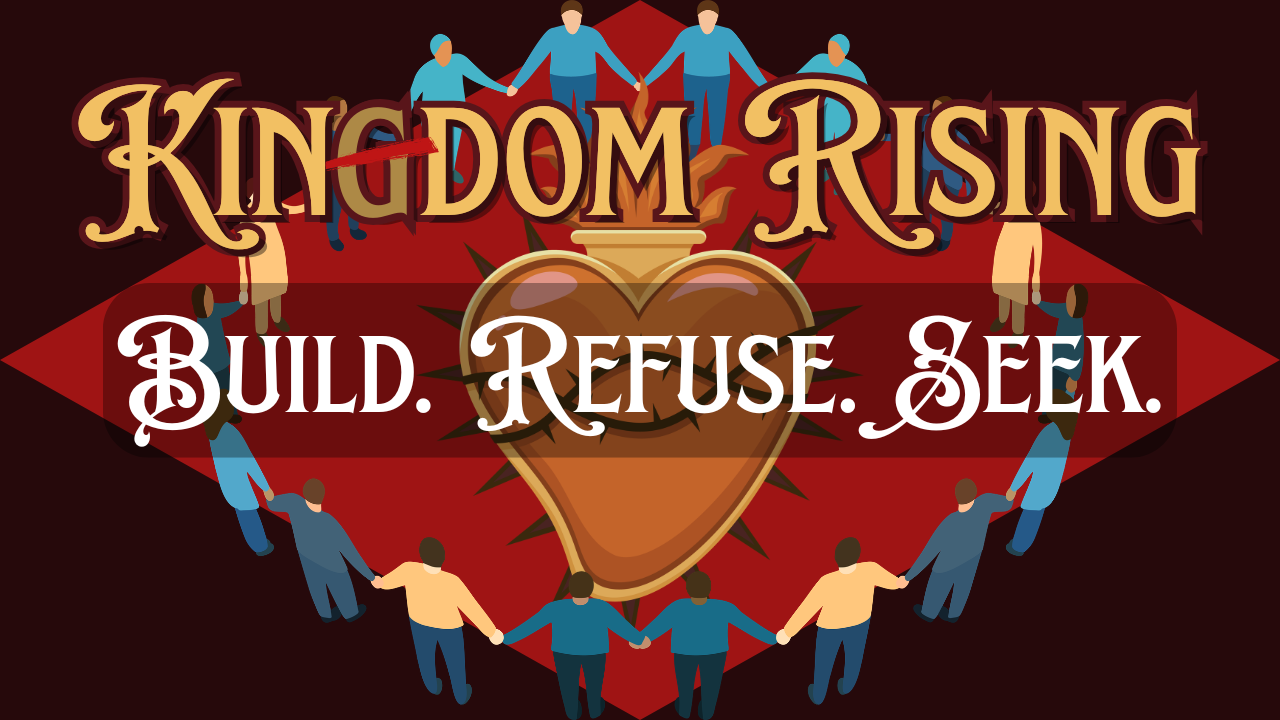
The call to build houses and plant gardens reminds us to build. Creativity is not optional; it is required resistance. Building houses and planting gardens is more than just construction, sowing, and reaping. We have to build our lives in these places and keep our focus on the lives we are living.
Christ calls us to life more abundantly. That is not a call to fortune and wealth. It is a call to be really and truly alive.
“Go your way—eat your bread with joy, and drink your wine with a merry heart; for God has already accepted your works. Let your garments be always white, and do not let your head lack oil. Live joyfully with the wife whom you love all the days of your life of vanity, which he has given you under the sun, all your days of vanity, for that is your portion in life, and in your labor in which you labor under the sun. Whatever your hand finds to do, do it with your might; for there is no work, nor plan, nor knowledge, nor wisdom, in Sheol, where you are going” (Ecclesiastes 9:7–10).
We are called to the works of wisdom and creation while we are alive. Vanity in this passage is emptiness, or in other words, only having the meaning we ascribe to it.
In all our ways, we must seek peace. We are called to be prophets, those who interfere with injustice. Peace is the ultimate interference with injustice.
Babylon, the land of confusion, requires people to be traumatized so its cycles of violence, greed, and fear continue. We cannot act in ways that traumatize others. We have to interrupt these cycles and help people to heal from the traumas they have been forced to endure.
Seeking peace requires us to find better ways to change the thoughts, beliefs, and actions of others. We have to engage with this world through right relationship rooted in mindfulness, compassion, creativity, and equity.
Freedom and liberty break chains and restore the land. They do not persecute, dehumanize, or harm those who live within it.
Peacekeeping and justice-making require us to interfere with injustice and disrupt the cycles of harm. Peace is not order or calmness. In Hebrew, peace is shalom. Shalom means a deep, active state of wholeness and right relationship in which people, community, and creation are aligned with justice, harmony, and the presence of God. The presence of God is life-giving and restorative.
Babylon breaks the peace of the city by dividing people and distorting the relationships people have with one another. Disrupting those systems and interfering with that injustice brings healing and wholeness to the city.
If we are going to live in Babylon, we have to build homes as sanctuaries and refuges, gardens to care for and aid those who live here, spread the gospel of the Kin-dom, seek peace, and live a life of integrity and hope.
That is much easier to say than it is to do, but this is the work of the ministry of reconciliation we are called into. We are a royal priesthood who serve all life, no matter where we are or who they are.
In every action, we must love kindness, do justice, and walk humbly with our God.
Building sanctuaries, tending gardens of aid and care, healing trauma, and peacekeeping are all the same act. They are living love of God into the world. This is how we live God in the world. In all these things we seek the peace of the city by living in the Kin-dom in our everyday life. We remember that the Kin-dom is not of this world. It is not of Babylon, but Heaven.
This peacekeeping starts small. Love one another as Christ loves us. Let that love grow and spread out to all living.
Show this love in the way that you can. If you can share a meal, do it. If you can start a community garden, do it. Each of our circumstances is different. Find one practical thing you can do, no matter how small it feels, and start doing it.
Even If Not
In Daniel 3, the king set up a statue and demanded that everyone worship it, but the people of God did not bow down and were cast into the fiery furnace and saved by a member of the Divine Council.
We are called to live in the Spirit of Truth. Notice in this story, they did not revolt. They did not tear down the statue. They stood on the rock of their faith, knowing there would be consequences for their actions. They rejected the cycles of Babylon, and in the story the fire cannot touch them. Why? Because they live in the world of the Kin-dom.
Now, I am not saying we will be supernaturally spared from the consequences of our actions, but we can see the pattern of interfering with injustice. We are called to stand up and be an example of right relationship and not a disruption to the peace of the city. The king and his soldiers broke the peace, not the people. The king had to bend the knee to their nonviolent resistance.
The faith of those cast into the fire is in the way they walk in peace. They said, “If it happens, our God whom we serve is able to deliver us from the burning fiery furnace; and he will deliver us out of your hand, O king. But if not, let it be known to you, O king, that we will not serve your gods or worship the golden image which you have set up” (Daniel 3:17–18).
They are not tempting God to show power in the world or to demonstrate dominion over the king. If God delivers them, that is God’s will and not proof they are right. The purpose of their actions is to show that they do not worship or serve the power of the Empire, the power of Babylon. That refusal is powerful and leads the king to praise the God they lived before his presence.
Daniel 3:28
28. Nebuchadnezzar spoke and said, “Blessed be the God of Shadrach, Meshach, and Abednego, who has sent his angel, and delivered his servants who trusted in him, and have changed the king’s word, and have yielded their bodies, that they might not serve nor worship any god, except their own God.
Refusal is a power greater than the state to bring liberty and freedom. When we reclaim our agency, we show the world what it means to be truly alive.
Prayer in the Lions’ Den
In Daniel 6, the king of Babylon has outlawed prayer to God, and Daniel is sealed up in the lion’s den because he continued to pray. This is not just a story of nonviolent resistance, but of divine protection.
Many in the lineage of Creation Spirituality believe that God sends ministering angels to help us. “For he will put his angels in charge of you, to guard you in all your ways” (Psalm 91:11). The Gospels and the New Testament take this as a given (Matthew 18:10; Acts 12:15).
This does not mean that we should take it for granted that God or our angels will save us no matter what situation we find ourselves in. We are not to test God like that (Matthew 4:7; Luke 4:12).
“Aren’t they all serving spirits, sent out to do service for the sake of those who will inherit salvation?” (Hebrews 1:14). I believe the ministering angels are sent out to do this service, but the story of Daniel in the lion’s den shows us how God and the angels interact with the world. They work through nature.
Humans are not the natural prey of lions. They will attack us, but we are not a good source of food. Keeping the lions from attacking Daniel is having them not only live in accord with their nature, but the nature of the Kin-dom.
The image of the Kin-dom as seen by Isaiah says, “The wolf will live with the lamb, and the leopard will lie down with the young goat, the calf, the young lion, and the fattened calf together; and a little child will lead them” (Isaiah 11:6).
This is the peace of the Kin-dom we are called to. Not that we approach wolves, leopards, and lions, but that we all will one day live in peace with all of the cosmos. This is the dream.
In most churches, this story is taught to children, and then the lessons we learn from it are written off as childish. It is too easy to forget that Jesus said, “Most certainly I tell you, unless you turn and become as little children, you will in no way enter into the Kingdom of Heaven” (Matthew 18:3). That does not mean that we are called to be naive, but that we are to see the world with the wonder and awe of a child and live in it playfully.
The ultimate act of resistance is to live with joy and to laugh in the face of tyranny.
The Illusion of Power
For as long as we live in Babylon, we will have to stare down the illusion of power and control that they press on the people. Babylon wants us to believe that power only comes through coercion and that life must be sustained from the exploitation of others. They shroud the world with the lie that their ways are the only ways.
The Kin-dom path shows us a different way. It breaks the chains of the cycles of trauma, suffering, greed, and fear that their power relies on to maintain it. The illusion of Babylon exists to obscure the way of Christ and to keep us from building a better world. It fosters the illusion of separateness that keeps us from fostering the solidarity needed to build a better world.
The way we break through that illusion is to live our lives in right relationship and build an alternative to the lies of Babylon. We exercise our vote, speaking up and standing up for the freedom and liberation of all people.
All my life I have been at war with Babylon, and I have the scars on my body, mind, and soul to show for it. It took me too long to understand the real nature of the struggle and the work.
Babylon is like a hydra. If you cut off one head, two grow back in its place. We can fight for female clergy, for example, but when that fight appears won, two new heads rise up. The church was implicitly misogynistic before and now is explicitly so.
For female clergy, they were welcomed into the church only if they would serve in a subservient role to a male priest or pastor. Many rose up and fought for their rights which is good to resist but did so through violence thinking they cut off the head of misogyny using shame and guilt. As a result two new heads rose up. We can see the rise of the outwardly misogynistic church, and the gave women power to rob them of their voice through responsibility and the elevated certain women preachers who would teach other women to be subservient to the patriarchy. Babylon is not defeated; it abandons the failed tactics and replaces them with others so it can continue the cycle without interruption. Now, many of the most misogynistic preachers are women.
Some of this is to be expected. When we put the metal in the crucible to be refined the slag will rise to the surface. If we are not careful we will only make those voices more prominent instead of removing them from the refined ore.
The problem was the fight. A fight is an infliction of violence to achieve an aim. We cannot take part in the systems of Babylon to end it. Disruption and interference interrupt the system, refine the ore, and remove the slag. Reclaiming Mary the mother of Jesus, Mary Magdalene, the other Marys, Susanna, Deacon Phoebe (Romans 16:1–2), Apostle Junia (Romans 16:7), Priscilla (Acts 18:2, 18:18, 18:26; Romans 16:3–5; 1 Corinthians 16:19; 2 Timothy 4:19), Mary of Rome (Romans 16:6), Tryphena (Romans 16:12), Tryphosa (Romans 16:12), Persis (Romans 16:12), Euodia (Philippians 4:2–3), Syntyche (Philippians 4:2–3), Nympha (Colossians 4:15), Chloe (1 Corinthians 1:11), and Thecla. There is a great cloud of witnesses that must be denied to remove rights from people that they had in the early church.
These names are sand in the gears. We cannot force change on people who do not want to change. We cannot fight them into change. What we can do is speak truth, disrupt their cycles of violence, and take actions to interfere with their injustice. Women were ordained in the early church, so ordain them. Live in the truth, not the lie. Babylon will chose violence, we have to build gardens and sanctuaries. So let the slag rise to the surface and slough off. If people want to live in the lie, we kick the dust off our heels and walk on, all the while watching our numbers grow.
It took me way too long to realize that I should stop fighting to be accepted by people who never would, and to stop the harm they wanted to do to me. Interfering with injustice shows the lie in their harm and trauma cycles and liberated me to live my life.
We each have to find the path of peacekeeping that works for us, but it must always have shalom in mind, because wholeness is always the goal. What restores wholeness.
Wholeness is the restoration of dignity, harmony, and equity to people’s lives. If that can be done in the system without engaging in the trauma, fear, greed, and lust of Babylon, do it. If not, build something new to do it.
The Presence in the Fog
Each of us, in our hearts, lives in the Kin-dom. Where two or three are gathered in the name of Christ, he is there in the midst of them. This brings the Kin-dom here, into the present moment. It is like a fan that blows the fog away, but when the wind stops blowing, the fog rolls back in.
This is why we call on the Presence to join us when we gather. It is why we call on the Shekhinah to make her home with us. We are constantly cleansing the air, the water, and the land around us.
Peacekeeping is our constant vigilance to keep the Anointing on us, our gatherings, and our collective lives. We need to have that vigilance because the cycles of Babylon are always calling to people to join them, and we have to exercise our authority to refuse that call.
A Vow in Exile
We have cried at the rivers we passed in our exile,
and allowed our tears to drift by with those waters.
We build our homes in the cities of Babylon,
our lives, our hopes, our dreams, our futures.
We tend our gardens for food and beauty,
since both sustain us in times like this.
We live as peacekeepers in the cities we call home,
breathing peace in every step and through all things.
We act as prayers as temples of the Living God,
bringing compassion, hope, and justice with us.
Live God wherever you are. Amen.
Watch the discussion here: